 our story

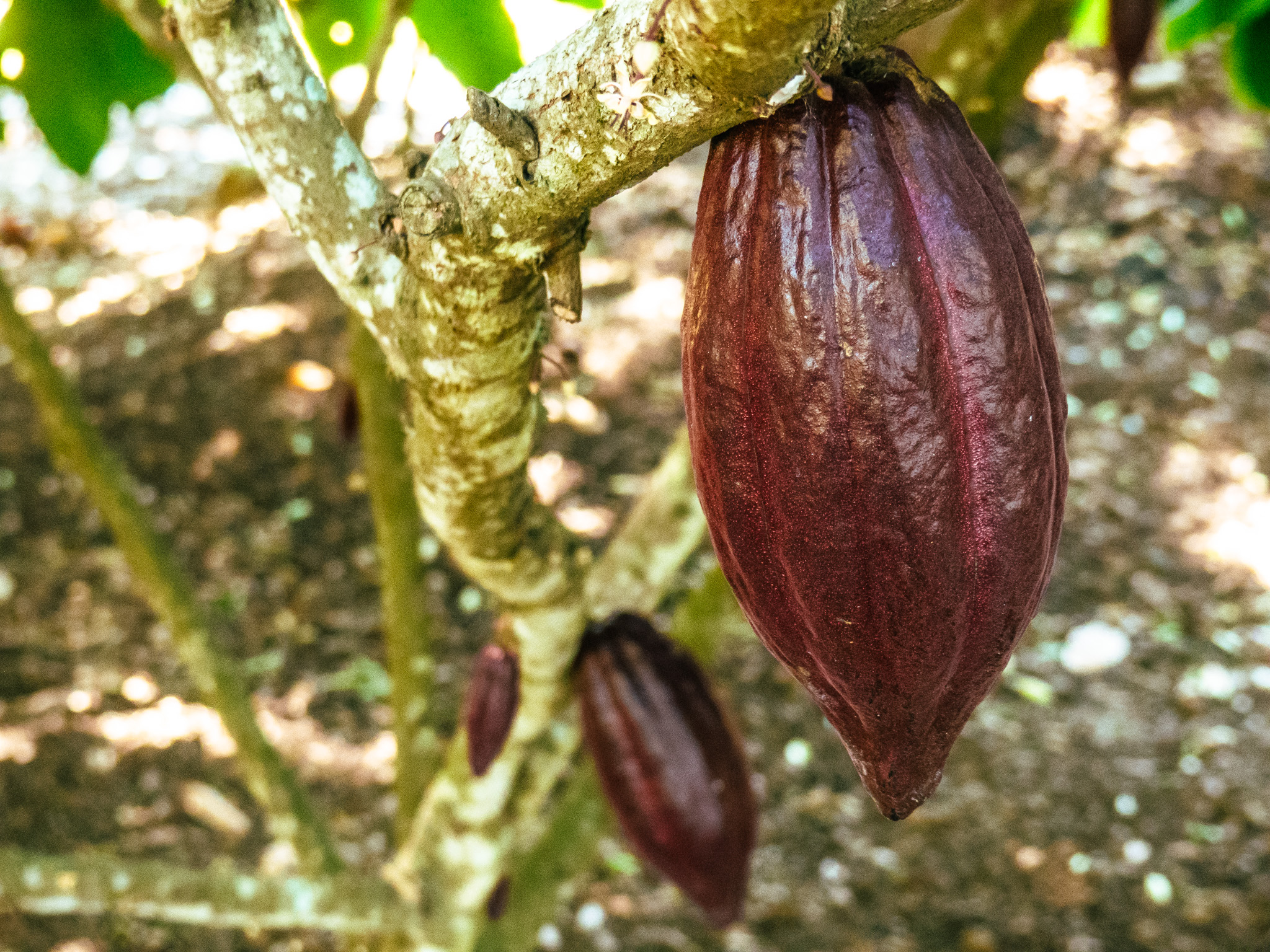
The cacao ecosystem is a living, discreet and fascinating world.
Before becoming a chocolate bar, every bean is born at the heart of a network of species that support, nourish and protect one another. Soils teeming with life, specialised insects, a wildlife community like no other.
For the cocoa tree’s flowers to become pods, and for its beans to develop their aromas, it needs this entire world around it.
Every bite of quality chocolate carries the imprint of this invisible world. Exploring it means understanding why what we eat is always, somewhere, a story of nature.
The cacao ecosystem begins in the soil
Before the trees, before the insects, before the pods, there is the earth. The soil of a healthy cocoa farm is a living, active environment that is constantly at work.
The leaf litter: the cacao tree's pantry
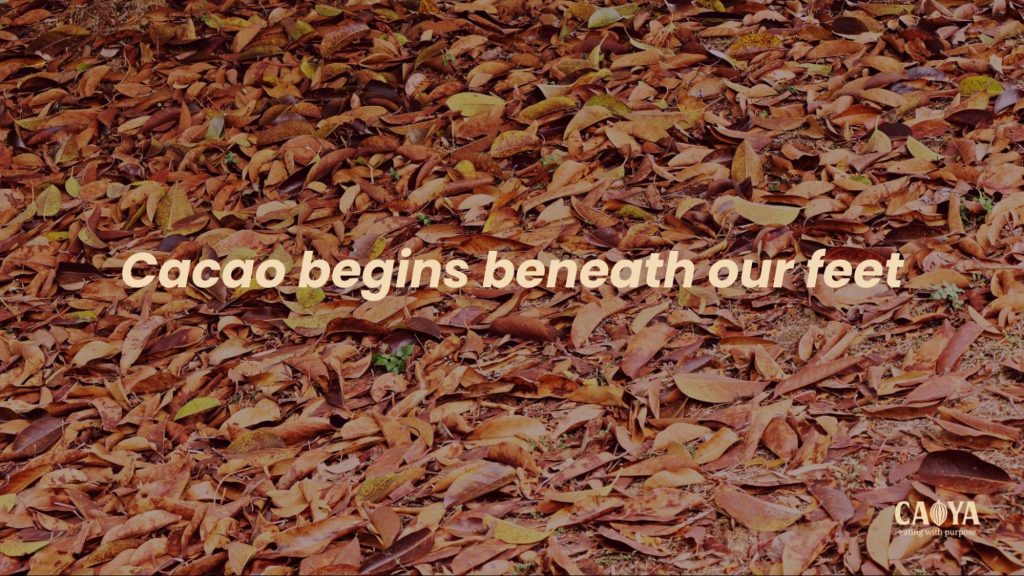
Under the cocoa trees, dead leaves accumulate into a thick organic layer called leaf litter.
What happens in this litter is fascinating: millions of bacteria, fungi, worms and decomposer insects transform all these leaves into nutrients accessible to the roots.
Without it, the cocoa tree loses access to this reservoir of life. It becomes dependent on chemical fertilisers to compensate for what the soil can no longer do naturally.
The litter also plays a less visible but equally essential role. It is the habitat of the cocoa tree’s pollinators. These are the insects that ensure the tree’s reproduction.
Mycorrhizal fungi: the invisible allies of the roots
Beneath the litter, there is an even more discreet network.
Mycorrhizal fungi attach themselves to the cocoa tree’s roots and extend them, like invisible arms reaching through the soil to capture water and minerals that the roots alone could never reach.
In return, the tree provides them with sugars from photosynthesis, which nourish them.
It is a collaboration that has existed for millions of years, and that soils depleted by chemicals gradually destroy.
Soil: a unique signature of the cacao ecosystem
The cocoa tree is deeply sensitive to its surroundings.
Every soil is unique, shaped by its geography and the organisms it contains. The mineral composition of the earth in Peru, for instance, is not the same as the one found in Indonesia or Côte d’Ivoire.
These differences leave an imprint in the bean. This is what we call “terroir”, a word borrowed from the vocabulary of wine.
Each soil gives rise to a unique aroma, different notes on the palate. This is why soil matters so much for cacao. What you taste in a good cacao is also, somewhere, the story of a land.
Small insects play a major role for cacao
A cocoa tree produces up to 100,000 flowers a year. They grow directly on the trunk and main branches (a rare botanical phenomenon called cauliflory). They exist for only 24 hours, and fewer than 5% of them give birth to a pod.
For these flowers to become cacao beans, pollinators are needed.
Midges: pollinators under a millimetre
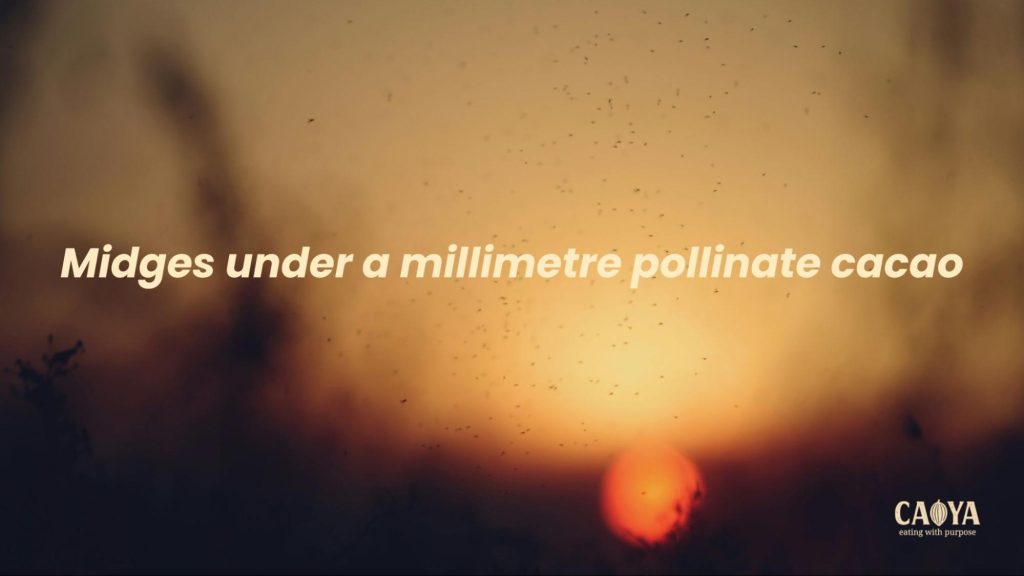
The cocoa tree is not generally pollinated by bees, bumblebees or butterflies. Its flowers are too small and too complex for them.
The task falls to far smaller insects: midges measuring less than a millimetre, so tiny they pass through most mosquito nets.
These midges live in the damp litter on the ground, in decomposing dead leaves and in the remains of pods left after harvest.
To survive, they need shade, moisture and a living forest around them. As they slip from flower to flower to feed, they carry pollen without even knowing it.
It is a relationship between a tree and an insect that nobody notices.
And nature still holds surprises. New studies in Indonesia have discovered that other pollinating insects also play a role. The cacao ecosystem is even richer and more mysterious than we imagined.
Ants: the quiet guardians of the cocoa tree
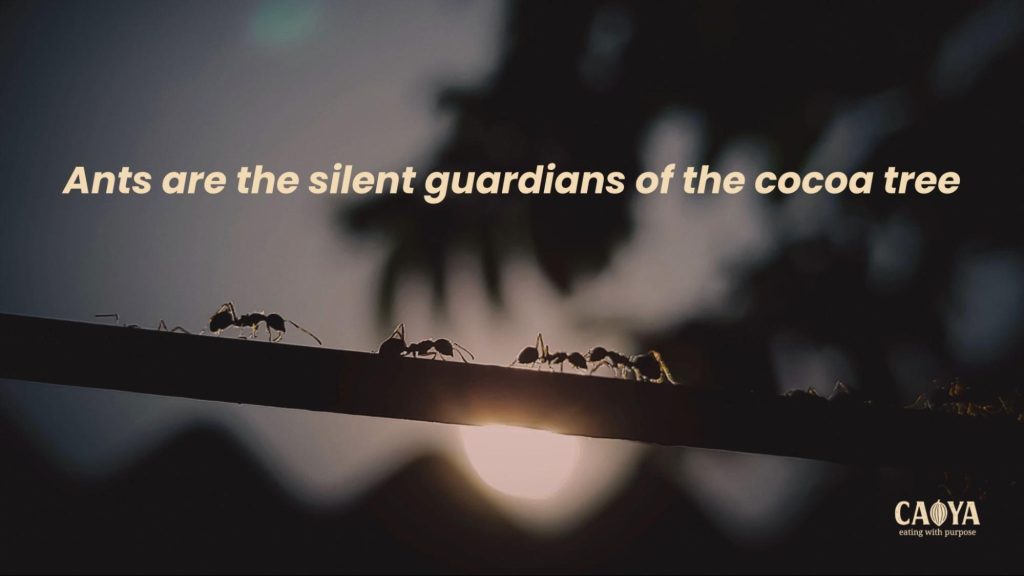
Ants do not pollinate cacao, but they are its guardians.
In cacao farms where life thrives, certain ant species settle on cocoa trees and protect them against pest insects that bore into the pods.
This is what we call a mutualistic relationship: the ant finds shelter and food on the tree, and the tree benefits from natural protection. A discreet alliance, but remarkably effective.
These ants, like the pollinating midges, only settle where the environment allows: in real forests, with leaf litter on the ground and a plant diversity that only nature can offer.
Being able to observe these ants is a sign that the cacao ecosystem is in good health.
Animals also protect cacao
In its natural habitat, the cocoa tree grows alongside birds, monkeys, bats, sloths, and other animal species that play a role in the balance of the forest and the cacao ecosystem.
Birds and bats: allies by day and night
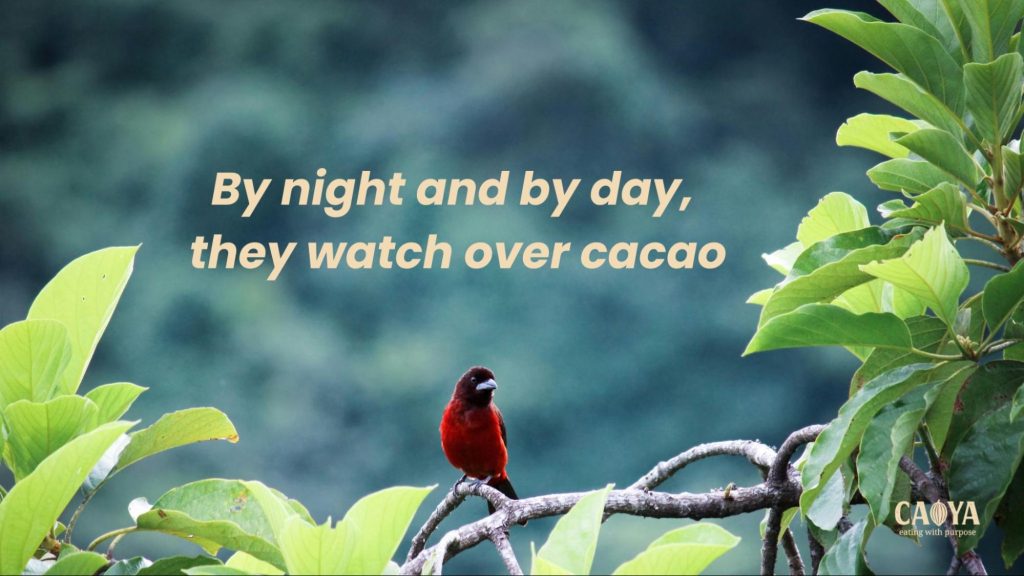
In the tropical forests where cacao grows, insectivorous birds and bats (which feed on insects) regulate pest populations.
For example, according to Bat Conservation International, an insectivorous bat can eat up to 1,000, or more, insects in less than an hour!
Alliance Biodiversity CIAT also states that birds and bats save cacao farmers up to $1,000 per hectare per year, simply by naturally regulating pests.
But this is only possible if cacao farms offer shade and shelter. Without it, these species disappear, and pests take hold.
Monkeys and sloths: seed dispersal
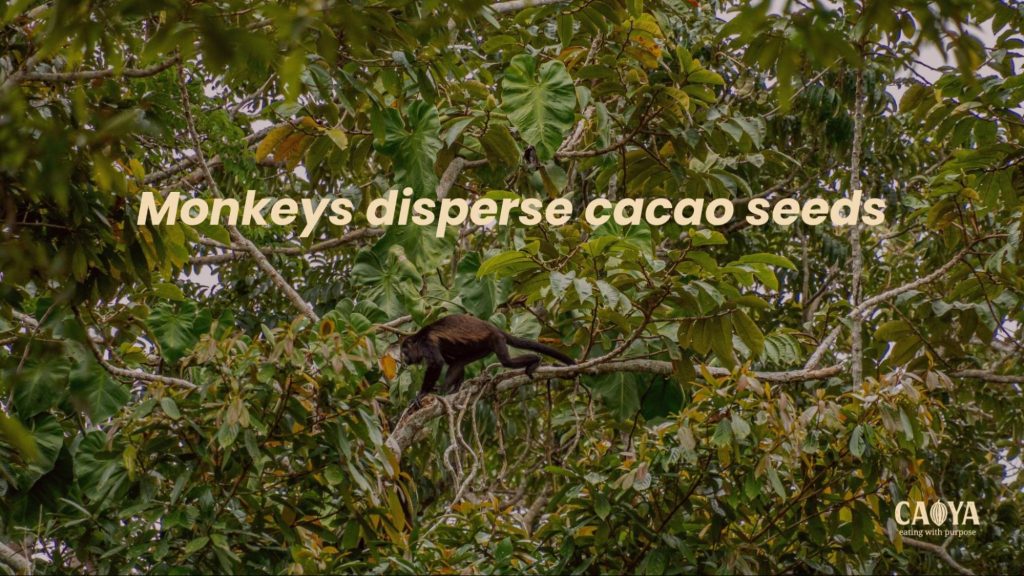
Monkeys too have their role to play. They share an ancient relationship with the cocoa tree, long before the birth of industrial chocolate.
The Mayas depicted them alongside the pods. Spider monkeys and howler monkeys consume the sweet white pulp surrounding the beans, then spit out the seeds.
As they move through the forest, without realising it, they directly contribute to the dispersal of cocoa tree seeds over great distances.
Sloths, squirrels and even frugivorous bats (those that eat fruit) play a similar role.
This is what we call an ecosystem service, a mutual relationship within biodiversity that no plantation can artificially reproduce.
The forest, its animals and cacao form a network that benefits each of them.
Trees: the forest as partner
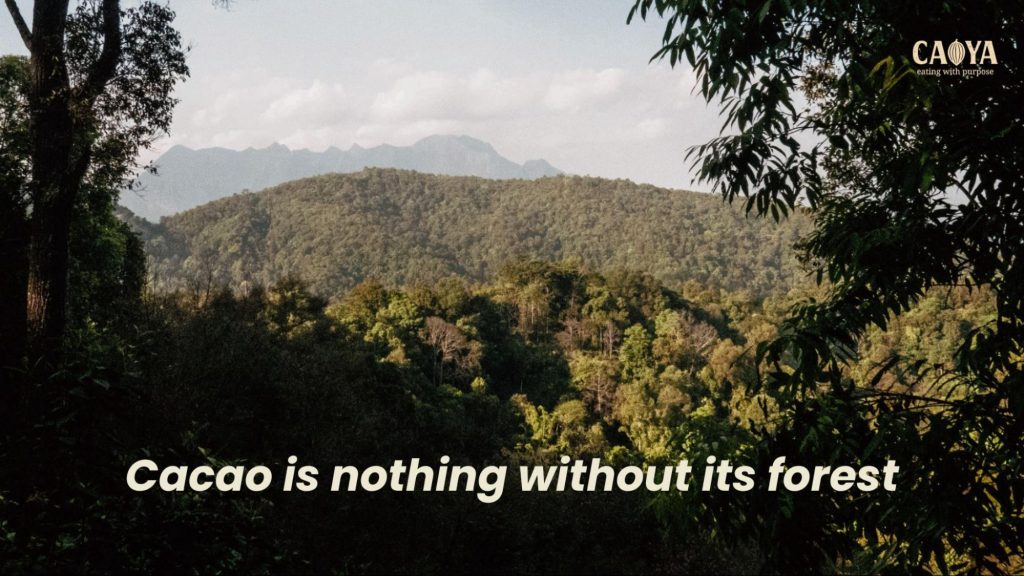
The cocoa tree is an understorey tree. This means that in its natural environment, it grows in the shade of canopy giants that protect and nourish it. When the cocoa tree grows alone, in a monoculture, everything changes.
Shade and climate regulation
The cocoa tree is a demanding tree. It needs stable warmth, constant humidity and filtered light. This is precisely what the large shade trees provide.
Under their branches, the ground temperature stays cooler and more stable, soil moisture evaporates more slowly, and air humidity is maintained at a level the cocoa tree recognises as its natural environment.
The large shade trees create around it this climatic bubble (without it, the cocoa tree struggles). Their fallen leaves enrich the litter and their roots enrich the soil.
Up above, in the branches of these great trees, an entire community takes up residence: mosses, lichens, migratory birds, rare insects, small arboreal mammals.
Cacao, alongside the other trees, contributes to maintaining these living environments, and these environments return the favour.
Physical protection against weather and disease
Shade trees do not only regulate the climate for the cacao ecosystem. They physically protect the cocoa tree.
Their trunks form a barrier against the wind, which would otherwise dry out the flowers and knock down immature pods. Their roots, intertwined with those of the cocoa tree, maintain soil cohesion during heavy tropical rains and reduce erosion.
The plant diversity they bring also slows the spread of disease, which travels far more easily through a uniform monoculture.
Cacao is not simply a tree, it is part of a perfect natural balance.
Everything is connected in the cacao ecosystem
The cacao ecosystem is not isolated. It is a complex and magical network where soil, fungi, insects, birds, bats, monkeys and trees support one another.
Remove one link and the others weaken. Soil that loses its litter loses its pollinators. A tree without shade loses its bats. A plantation without wildlife becomes dependent on pesticides to do what biodiversity did naturally.
This is the connection we choose to respect at Caoya, by selecting terroirs where the cacao ecosystem is still alive.
Every one of our bars carries within it the heritage and symbiosis of a preserved forest.
Curious to discover the taste of nature? Be among the first to taste our ethical chocolate in harmony with this living world.
FAQ : Cacao ecosystem
Do bees pollinate cacao?
No. Their bodies are too large to enter the cacao flowers, which are very small and structurally complex. Far smaller insects carry out this task, and all depend on a healthy forest habitat to survive.
Can a cocoa tree produce without a forest around it?
Yes, but less well and for less long. Without shade, leaf litter and associated wildlife, it becomes more vulnerable to disease, pests and drought. Yields fall in the medium term, and the aromatic quality of the beans diminishes.
Are monkeys enemies or allies of the cocoa tree?
Both. In intensive farming, they can damage the pods. In their natural habitat, they are essential to seed dispersal. They have contributed for millennia to the natural propagation of the cocoa tree across tropical forests.
What is cocoa monoculture?
It is a farming method where cocoa trees are planted alone, without shade trees or plant diversity. This intensive model produces more in the short term but rapidly depletes soils, eliminates pollinators and makes the tree dependent on chemicals.
What is the difference between monoculture and agroforestry?
In a monoculture, the cocoa tree grows alone. In agroforestry (lien vers la page agroforesterie quand live sur le mot agroforestry), it coexists with other trees and crops that regulate the climate, nourish the soil and shelter wildlife. It is a return to the cocoa tree’s natural conditions, making it more resilient and more aromatic.