E-shop opening in September 2026

Understanding cacao to choose your chocolate better

Cacao is the foundation of all chocolate. Yet at the moment of purchase, few people know what cacao is, its history, where it comes from, what sets one apart from another, or how to choose. Our chocolate begins long before it reaches your hands, in the cacao beans we carefully select for your pleasure.

The origins of cacao: 4,000 years of history

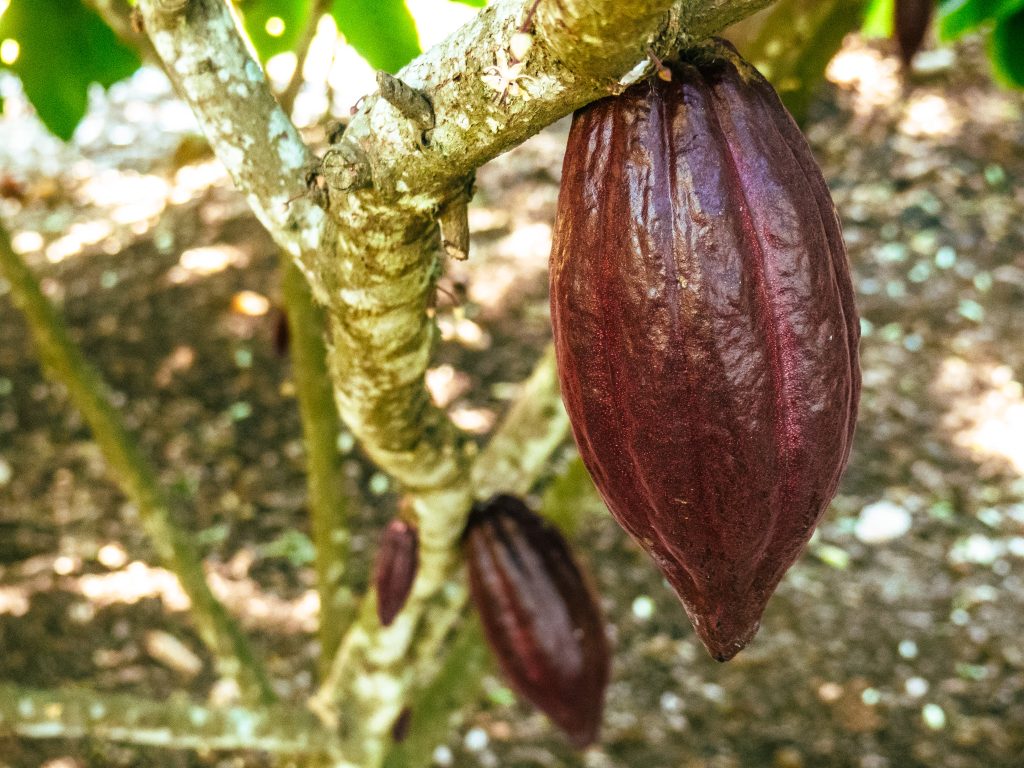
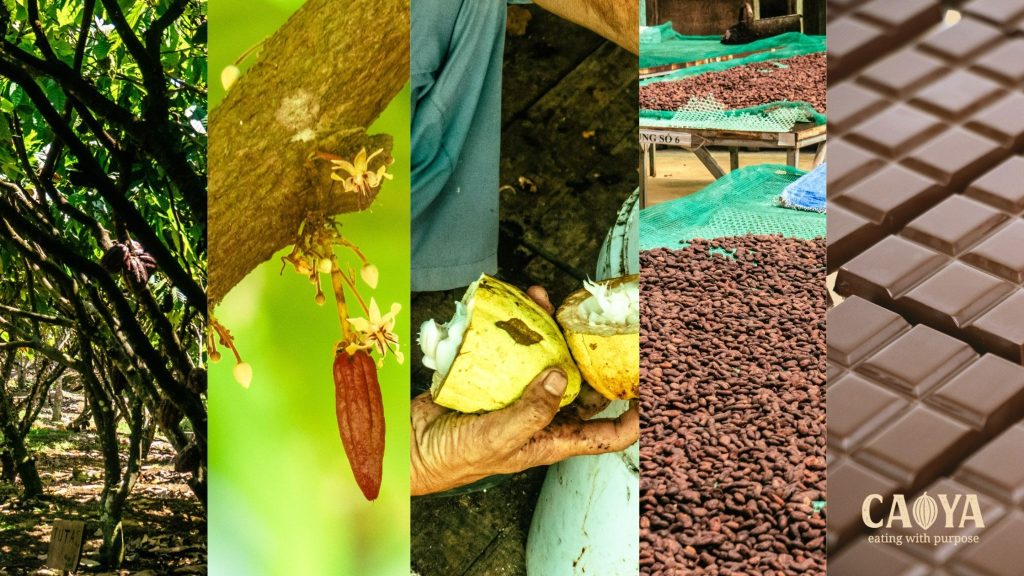
The cacao tree (Theobroma cacao, “food of the gods” in Greek) originally grows in the tropical forests of Central and South America. Its fruits, the cacao pods, contain the beans from which chocolate is made. 

The Mayas and Aztecs were the first to use cacao as a ceremonial drink, and the beans as currency. It is from this origin that the name CAOYA was born (Cacao + Maya = CAOYA), a reminder that chocolate has a far richer and older history than the industrial bar. 

Cacao later reached Europe. With the addition of sugar and milk, the first milk chocolate bar appeared in 1875. Today, we offer you a chocolate that brings the origin and delicacy of cacao back to the forefront, gradually forgotten by industrialisation.

Cacao-producing countries

Several regions of the world produce cacao, but two in particular interest us at CAOYA: Latin America, the historical home of cacao, and South-East Asia, a discreet producer with distinctive aromas.

This is where cacao was born. Each country in Central and South America produces beans with refined aromas and distinctive characteristics. 

Among them, the Dominican Republic holds a special place: although it is only the 10th largest producer by volume, it is one of the leaders in organic cacao, recognised for its superior aromatic quality. 

This is where we source our beans, alongside Panama and Peru, to offer you a chocolate with character that respects nature. Our Symphonie de terroirs bars bring together beans from these different countries for a unique aromatic experience.

South-East Asia, and Indonesia in particular, is an important producer, less known than its Latin American neighbours. Indonesian cacao stands out for its earthier, spicier notes, which have been attracting specialty chocolate makers for several years. 

Although cacao monoculture is still present, agroforestry producers are emerging, in harmony with nature. These are the producers we choose to work with, to honour our commitment to biodiversity while offering a high-quality chocolate.

What influences the taste of cacao

The taste of cacao begins long before the chocolate. The soil, climate, altitude and bean variety all influence cacao’s aromas, which vary from one region to another.

As with wine, terroir greatly influences the taste and quality of cacao. 

Healthy soil transmits nutrients to the beans that you later find in the chocolate you taste. Above 600 metres altitude, pod maturation slows and the beans develop more refined aromas. 

The cacao tree also needs moisture and shade to grow properly. This is precisely what agroforestry offers. By growing cacao alongside other trees, soils are of better quality, retain moisture more effectively and create the natural shade it needs.

There are three main cacao varieties, each with a unique flavour profile. 

  • The Forastero is the most widespread in industrial production and the most resilient to grow. Its smooth pods turn from green to bright yellow at maturity. 
  • The Criollo is rare and recognised for its fine, floral aromas. It is identifiable by its bumpy pods, ranging from yellow to light red. 
  • The Trinitario is a natural cross between the two, with a more developed aromatic profile than the Forastero. Its colours are the most varied, ranging from green to orange at maturity. 

It is the combination of variety, terroir, harvesting and production methods that shapes the quality of cacao, and therefore the chocolate it will become.

How to choose your chocolate

To appreciate all the subtle aromas of cacao, knowing how to choose your chocolate makes all the difference.

Dark chocolate

Cacao paste, cacao butter, sugar. The higher the percentage, the less sugar it contains. Dark chocolate is the most concentrated in cacao. 

Milk chocolate

Cacao paste, cacao butter, sugar and milk. Softer and less concentrated in cacao than dark chocolate. At CAOYA, we replace animal milk with a plant-based alternative. 

White chocolate

Cacao butter, sugar and milk. It contains no cacao paste, so its taste is very different from dark or milk chocolate.

An ethical organic chocolate is recognisable by its short ingredient list, an identifiable origin and the absence of fat substitutes for cacao butter. 

An organic certification guarantees the absence of pesticides, an agroforestry certification ensures that the farming model respects soils and biodiversity. 

This is what you will find at CAOYA.

Cacao, before becoming an industrial chocolate, is a unique plant. Its taste and quality depend on the environment in which it grows and the biodiversity that surrounds it. Protecting this biodiversity, our mission, is protecting the chocolate you love.

Livraison offerte à partir de ..

Paiement sécurisé

Expédition soignée

Economie sociale et solidaire

0
0
Votre panier
Empty CartVotre panier est vide

Dans une démarche plus respectueuse du vivant, nous n'expédierons pas les commandes composées d’un seul article, afin de limiter les emballages et le transport associés à chaque envoi. Ajoutez simplement un second produit CAOYA à votre panier pour finaliser votre commande.


Frais de livraison calculés lors de la commande